|
Electronic Exhibits
|
Southern New England Telephone Company: The First Fifty Years
On January 28, 1878, two years after Alexander Graham bell was awarded a patent on his primitive telephone, the world's
first commercial telephone exchange opened for business in New Haven, Connecticut. George W. Coy, Herrick P. Frost and Walter
Lewis, with a great deal of courage, some makeshift equipment, and $600 of borrowed money, put Bell's invention to work. Their
enterprise was called the District Telephone Company of New Haven. By 1882 it was known as the Southern New England Telephone
Company. View the Exhibit >
|
|
|
|
Going Beyond the Call: Southern New England Telephone Company's Response to Natural Disasters
in Connecticut
The natural disasters that devastated Connecticut in the 19th and 20th centuries -- The Blizzard of 1888, the Floods of
1936 and 1955, and the Hurricane of 1938 -- wreaked havoc on the state's telephone system as well. The Southern New England
Telphone Company acted swiftly and efficiently to restore service to their customers after each disaster, truly "Going
Beyond the Call." View the Exhibit > |
|
|
|
Voices from the Underground: Radical Protest and the Underground Press in the "Sixties"
Denied access to conventional media such as newspapers or network television, anti-war and counter cultural activists
took advantage of technological innovations in printing processes to create media of their own. Beginning with a handful
of “underground” newspapers, such as the Los Angeles Free Press, The Berkeley Barb, and
The Realist, the underground press rapidly found a wide audience, resulting in a proliferation of copies available in
virtually every major city and university campus in the country. By 1969, at least four hundred underground newspapers
flourished, most united in spirit by opposition to the Vietnam War, and advocating rejection of traditional American values,
while embracing rock music, experimentation with drugs, and a breakdown of sexual barriers.
View the Exhibit >
|
|
|
|
Railroad Stations in Southern New England
Railroad stations in southern New England ranged from opulent structures in larger hub cities, to simply
designed town stations, to country depots that offered little more than shelter from the weather. But regardless
of their grandeur, the stations, most built along the right-of-way of the New York, New Haven & Hartford
Railroad, are evidence of a time when the railroad was the country's main means of travel.
View the Exhibit >
|
|
|
|
Wilcox College of Nursing: A History, 1908-1997
The Wilcox College of Nursing was first established in 1908 under the direction and supervision of the
Middlesex Hospital in Middletown, Connecticut. It was known as the Middlesex Hospital Training School and,
although a private institution funded by the hospital, was not for profit.
View the Exhibit >
|
| Students at the Wilcox College of Nursing.
|
|
|
|
A Tribute to the Union Station of Canaan, Connecticut
On October 13, 2001, the Union Station at Canaan, Connecticut, was almost entirely destroyed by fire.
These images, from the Railroad History Archive, show this grand station as it once was.
View the Exhibit>
|
Canaan, Connecticut, railroad station, 1949.
|
|
|
Treasury of the Human Spirit: An Exhibition of Books and Manuscripts from Archives & Special
Collections
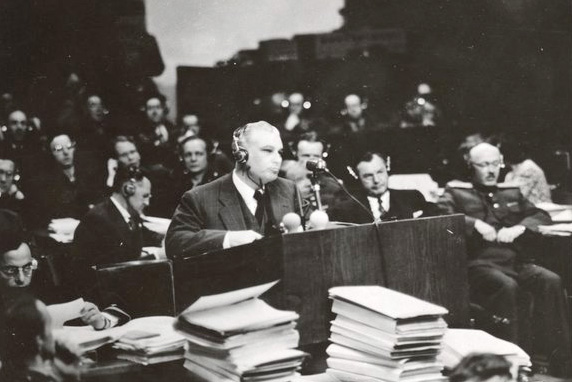
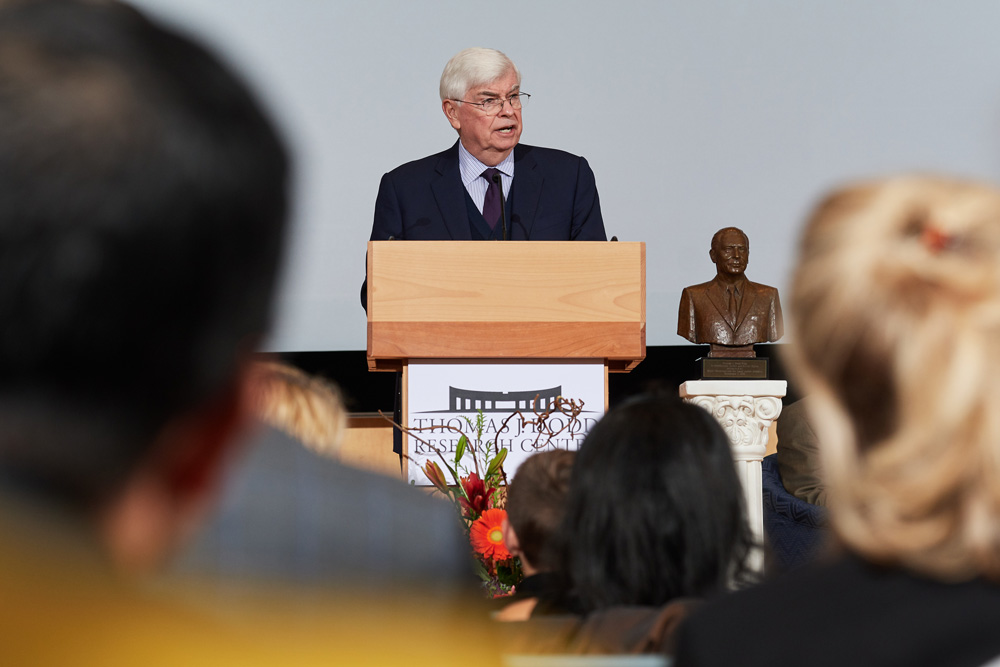
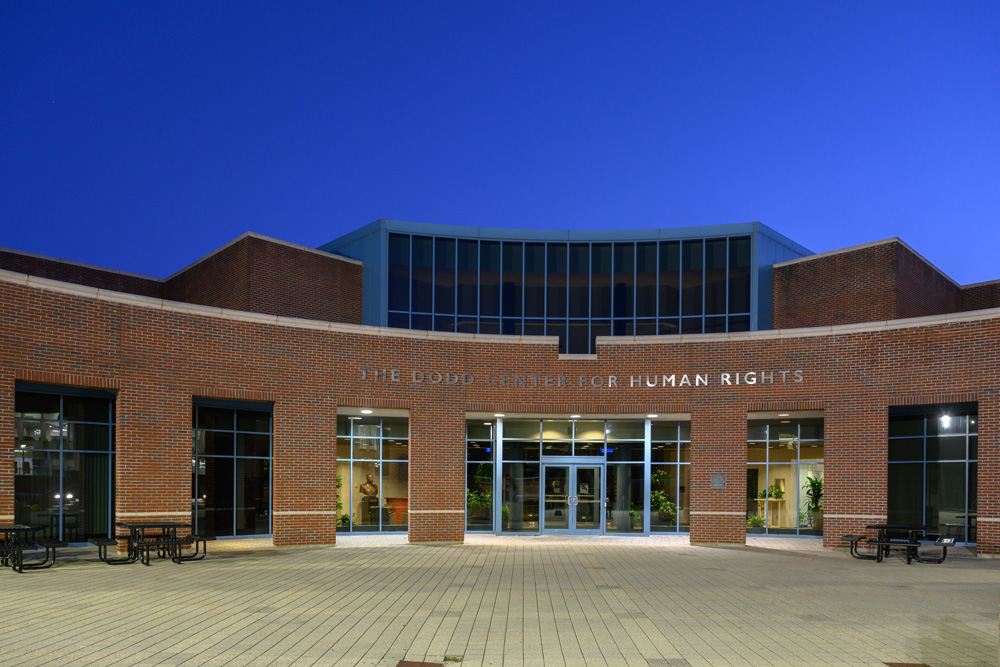
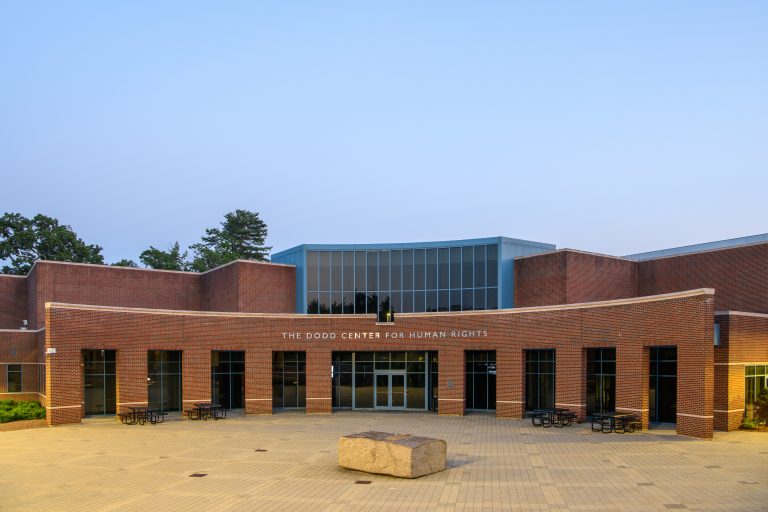
This exhibit marks the dedication of the Thomas J. Dodd Research Center in 1995 and commemorates the 50th anniversary
of the Nuremburg Trials, for which Thomas J. Dodd, Senator of Connecticut from 1959 to 1971, was executive trial counsel.
View the Exhibit >
|
Hugo Grotius, De Jure Belli ac Pacis, 1670.
|
|
This page is maintained by L. Smith.
|